

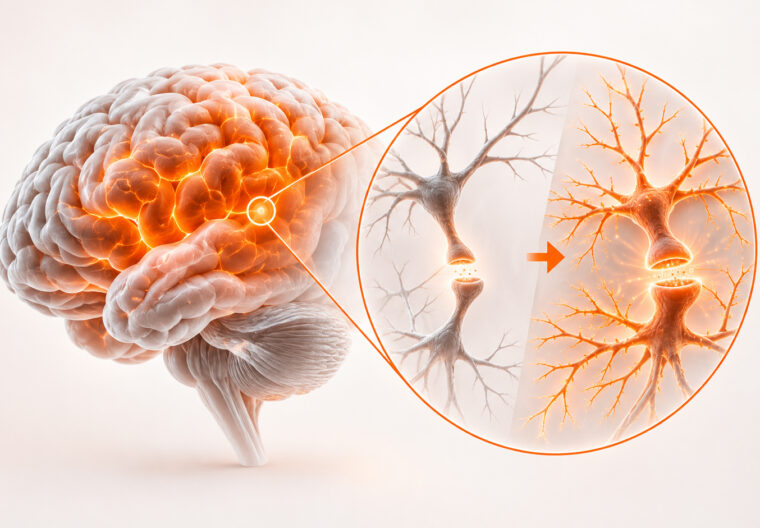
Neuroplasticity: How Your Brain Rewires Itself Through Learning, Experience and Behaviour
Introduction: Your Brain Is Not a Fixed Machine
Imagine learning to play a musical instrument for the first time. Initially, your fingers struggle to coordinate, remembering the notes requires considerable effort, and every movement demands conscious attention. After weeks or months of practice, however, the same movements become smoother, faster and almost automatic.
What has changed?
It is not simply your skill level. Your brain has adapted.
The human brain is not a static biological structure. It is a dynamic system that continuously modifies its connections, organization and patterns of activity in response to learning, experience, environmental demands and behaviour. This remarkable capacity is known as neuroplasticity, also called brain plasticity.
For much of the twentieth century, the adult brain was frequently viewed as relatively fixed after development. Modern neuroscience has challenged this assumption. Research demonstrates that the adult brain retains the ability to modify its neural circuits, strengthen existing connections and reorganize functional networks throughout life (May, 2011; Milbocker et al., 2024).
Neuroplasticity is not merely an interesting neurological phenomenon. It is the biological foundation of learning, memory formation, skill development, behavioural adaptation and aspects of recovery following neurological injury.
It also offers an important perspective on human potential: our experiences do not simply change what we know; they can change the neural systems through which we think, learn and behave.
1. What Is Neuroplasticity?
Neuroplasticity refers to the brain’s ability to modify its structure, function and neural connections in response to internal and external experiences.
The term combines two concepts:
- Neuro: Relating to neurons and the nervous system.
- Plasticity: The capacity to change, adapt or reorganize.
In simple terms, neuroplasticity is the brain’s ability to adapt its wiring according to what we repeatedly experience, practise, learn and encounter.
These changes can occur at several levels:
- Synaptic level: Changes in the strength of communication between neurons.
- Cellular level: Changes in neuronal structure, including dendritic branches and synaptic connections.
- Circuit level: Changes in how groups of neurons communicate.
- Network level: Reorganization of functional connections across different brain regions.
Neuroplasticity is involved in both normal learning and adaptation following injury. It is influenced by genetics, age, environmental conditions, physiological state and individual experience (Kolb & Gibb, 2011; Milbocker et al., 2024).
A fundamental distinction: Neuroplasticity does not mean that the brain can become anything we imagine. It means that neural systems retain a capacity for experience-dependent modification, within biological, developmental and environmental constraints.
2. The Science Behind Brain Rewiring: How Does Neuroplasticity Work?
To understand neuroplasticity, we first need to understand how neurons communicate.
The human brain contains billions of neurons. These specialized cells communicate through electrical and chemical signalling.
A typical neuron consists of three major components:
- Dendrites: Receive signals from other neurons.
- Cell body (soma): Integrates incoming information.
- Axon: Transmits electrical signals towards other cells.
Communication between neurons commonly occurs at specialized junctions called synapses.
When we learn something new, repeated neural activity can modify the effectiveness of communication across relevant synapses.
Over time, these changes can contribute to the formation of more efficient neural circuits.
2.1 Synaptic Plasticity
Synaptic plasticity refers to changes in the strength or effectiveness of communication between neurons.
It is one of the fundamental mechanisms underlying learning and memory.
Two important forms are:
Long-Term Potentiation (LTP)
Long-term potentiation is a persistent increase in synaptic strength following particular patterns of neuronal activity.
A simplified example:
When you repeatedly practise a new skill, relevant neural circuits are activated. Under appropriate conditions, molecular processes involving calcium signalling and changes in synaptic receptors can strengthen communication between neurons.
This makes subsequent activation of the circuit more effective.
LTP has been extensively studied, particularly in the hippocampus, a brain region central to several forms of learning and memory (Lisberger, 2024).
Long-Term Depression (LTD)
Long-term depression refers to a persistent reduction in synaptic strength.
Importantly, this is not necessarily harmful.
The brain needs mechanisms to strengthen useful connections and weaken others. LTD contributes to the refinement of neural circuits and helps maintain balanced network activity.
Learning therefore involves more than strengthening connections. It also involves modifying and refining existing ones.
2.2 Structural Plasticity
Structural plasticity refers to physical changes in neural structures.
These changes may include:
- Formation and elimination of dendritic spines.
- Changes in dendritic branching.
- Formation and elimination of synapses.
- Changes in axonal connectivity.
- Modifications in the structure of particular brain regions.
One influential experiment demonstrated this phenomenon in adults learning to juggle.
Draganski et al. (2004) used magnetic resonance imaging to examine structural changes in participants who learned juggling. They observed transient changes in grey matter in brain regions associated with processing and storing visual motion information.
The important implication was that learning a new skill could be associated with measurable changes in adult brain structure.
2.3 Functional Plasticity
Functional plasticity refers to changes in how neural circuits and brain regions contribute to particular functions.
For example, following a brain injury, some functions may be supported by alternative neural networks or reorganized circuits.
This is particularly important in neurological rehabilitation.
However, functional recovery does not necessarily mean that another brain region completely replaces the damaged region. Recovery depends on the nature of the injury, the remaining neural pathways, the rehabilitation process and individual factors (Kleim & Jones, 2008).
2.4 Neurogenesis and Neuroplasticity
Neurogenesis refers to the formation of new neurons.
It is related to brain plasticity but should not be treated as synonymous with it.
Research suggests that neurogenesis occurs in selected regions, particularly the hippocampal dentate gyrus in several animal models. The extent and functional significance of adult hippocampal neurogenesis in humans remain subjects of scientific debate.
Most everyday learning-related neuroplasticity does not require the creation of entirely new neurons. Changes in synaptic strength, dendritic structure and network organization are also important.
3. How Does Learning Change the Brain?
Learning is not simply the acquisition of information. It involves modifications in the neural systems that encode, process and retrieve that information.
Consider learning a new language.
Initially, you may struggle to recognize unfamiliar sounds, remember vocabulary and construct sentences.
With practice, your brain becomes more efficient at processing relevant information.
Different neural systems contribute to this process:
Hippocampus: Important for forming and consolidating many types of new memories.
Prefrontal cortex: Contributes to working memory, planning, attention and cognitive control.
Temporal and language-related networks: Participate in processing speech, meaning and language-related information.
Auditory cortex: Helps process the sounds and patterns of speech.
Repeated exposure and practice can modify the interactions between these systems.
The result is improved performance and, in some circumstances, measurable structural and functional changes.
The Role of Repetition
Repetition is one of the important conditions supporting experience-dependent plasticity.
However, repetition alone does not guarantee meaningful learning.
The quality of practice matters.
Focused attention, appropriate difficulty, feedback, sufficient challenge and opportunities to consolidate learning all influence how effectively an experience modifies neural circuits.
Kleim and Jones (2008) described several principles of experience-dependent plasticity, emphasizing the importance of factors such as repetition, intensity, specificity, salience and timing.
This leads to a useful distinction:
- Passive exposure may provide information.
- Active engagement creates opportunities for learning.
- Deliberate and appropriately challenging practice supports skill development.
4. Neuroplasticity Across Different Stages of Life
Does neuroplasticity stop after childhood?
No.
The brain is particularly adaptable during early development, but its capacity for plasticity continues throughout adulthood and older age.
The nature and extent of plasticity vary across developmental stages.
Childhood: Rapid Brain Development
During childhood, the brain undergoes extensive development.
Neural connections are formed and refined through genetic influences, sensory experiences, social interaction and learning.
Experience plays an important role in shaping developing neural systems.
Adolescence: Refinement and Reorganization
Adolescence is associated with continued structural and functional brain development.
Processes such as synaptic refinement and changes in neural connectivity contribute to the development of cognitive control, emotional regulation and complex behaviour.
Adulthood: Experience-Dependent Plasticity
Adult brains continue to adapt through learning, professional activities, physical training, social experiences and environmental demands.
May (2011) reviewed evidence demonstrating that experience and learning can influence adult human brain structure.
Older Age: Plasticity With Changing Constraints
Neuroplasticity does not disappear with ageing.
However, the rate, extent and mechanisms of plastic changes may differ with age and health.
Learning new skills, maintaining physical activity and engaging in cognitively stimulating experiences can support brain health throughout later life (Milbocker et al., 2024).
The important message is that learning is not restricted to childhood.
5. What Happens When You Learn a New Skill?
One of the most compelling demonstrations of neuroplasticity comes from studies involving skill acquisition.
Consider three examples.
Example 1: Learning to Play a Musical Instrument
Learning an instrument requires the coordination of multiple systems:
- Auditory processing.
- Motor coordination.
- Attention.
- Memory.
- Sensory feedback.
- Timing and prediction.
With sustained practice, neural systems involved in auditory and motor processing can adapt.
Research involving musicians has demonstrated experience-associated differences in brain structure and functional organization (Herholz & Zatorre, 2012).
Example 2: Learning to Drive
Driving involves much more than controlling a vehicle.
It requires attention, spatial processing, decision-making, motor coordination and the continuous integration of sensory information.
During early learning, many of these operations demand conscious attention.
With experience, familiar driving operations become more efficient and require less deliberate control.
This is an example of experience-dependent changes in the systems supporting complex behaviour.
Example 3: Learning a New Language
Language learning involves multiple cognitive processes, including auditory discrimination, working memory, semantic processing and retrieval.
Consistent practice exposes the brain to new patterns of sound, meaning and communication.
Over time, these experiences can modify the neural systems involved in language processing.
These examples demonstrate that neuroplasticity is not restricted to laboratory experiments. It is part of everyday human learning.
6. Neuroplasticity and Brain Recovery After Injury
One of the most clinically important applications of neuroplasticity is neurological rehabilitation.
After a stroke or traumatic brain injury, neural circuits may become damaged, disrupting movement, speech, memory or other functions.
Recovery may involve several processes:
- Restoration of function in partially damaged neural tissue.
- Reorganization of surviving neural networks.
- Recruitment of alternative neural pathways.
- Development of compensatory strategies.
- Learning through structured rehabilitation.
For example, a person recovering from a stroke may initially struggle to move one arm.
Through carefully designed rehabilitation, repeated task-specific practice and appropriate feedback, surviving neural systems may adapt to support improved movement.
Kleim and Jones (2008) emphasize that rehabilitation should consider principles such as repetition, specificity, intensity and task relevance.
However, neuroplasticity does not guarantee complete recovery.
The extent of recovery depends on injury severity, location, timing, individual health and the effectiveness of rehabilitation.
Neuroplasticity provides a biological foundation for recovery, not a promise of a particular clinical outcome.
7. Factors That Influence Neuroplasticity
Neuroplasticity is influenced by several interacting biological and environmental factors.
Understanding these factors helps explain why some experiences support learning and adaptation more effectively than others.
7.1 Physical Exercise
Physical activity is associated with several biological processes relevant to brain plasticity.
One important molecule is brain-derived neurotrophic factor (BDNF).
BDNF is a neurotrophin involved in neuronal survival, synaptic function and plasticity.
Research by Erickson et al. (2011) demonstrated that aerobic exercise training in older adults was associated with increased anterior hippocampal volume and improvements in spatial memory.
The study provides important evidence connecting physical activity, hippocampal structure and memory performance.
7.2 Sleep and Memory Consolidation
Sleep is essential for several aspects of learning and memory.
Memory consolidation refers to processes through which newly acquired information becomes more stable over time.
Different sleep stages contribute to different aspects of memory processing.
Sleep supports the reorganization and stabilization of neural representations rather than simply switching the brain off.
Dijk and Born (2010) reviewed evidence demonstrating the importance of sleep in memory consolidation.
Consistently inadequate sleep can interfere with attention, learning and memory performance.
7.3 Nutrition and Brain Health
The brain requires adequate energy and nutrients to maintain normal physiological functioning.
Nutrients such as omega-3 fatty acids, vitamins, minerals and antioxidants contribute to different aspects of neuronal and metabolic health.
However, it is important to distinguish general nutritional support from claims that a particular food or supplement directly increases neuroplasticity.
A balanced dietary pattern supports overall brain health, but no single food has been established as a neuroplasticity shortcut.
7.4 Mindfulness and Meditation
Mindfulness involves deliberately attending to present-moment experiences with an attitude of openness and reduced automatic judgement.
Research has investigated associations between mindfulness practice and changes in brain structure, attention and emotional regulation.
For example, Hölzel et al. (2011) reported changes in grey matter concentration in several brain regions following an eight-week mindfulness-based stress reduction programme.
These findings are interesting, but they should not be interpreted as proof that meditation produces identical structural changes in everyone.
7.5 Social Interaction
Human beings are fundamentally social.
Conversation, relationships, collaboration and shared experiences involve multiple cognitive and emotional systems.
Social interaction can provide opportunities for learning, emotional regulation and cognitive stimulation.
Environmental enrichment and social experiences are also discussed as relevant influences in contemporary reviews of neuroplasticity (Milbocker et al., 2024).
7.6 Stress and Emotional Experiences
Stress influences the biological systems involved in learning and memory.
The effects depend on intensity, duration, timing and individual circumstances.
Acute stress may sometimes enhance memory for emotionally significant events, whereas chronic stress can negatively affect aspects of cognitive functioning and neural plasticity.
This is an important reminder that the brain does not adapt only to positive experiences.
It adapts to challenging and adverse environments as well.
8. Can You Improve Neuroplasticity? Evidence-Based Strategies
Although neuroplasticity is a natural biological process, lifestyle and behavioural experiences can influence the conditions under which it occurs.
The following strategies are supported by different areas of neuroscience research.
1. Learn Something New
Choose an activity that requires sustained attention and active learning.
Examples include:
- Learning a musical instrument.
- Studying a new language.
- Learning a programming language.
- Developing a creative skill.
- Acquiring a new professional competency.
The objective is to engage in meaningful learning rather than simply consume information.
2. Practise Consistently
Practice provides repeated opportunities for neural circuits to adapt.
Instead of attempting to master a skill in one long session, distribute practice across multiple sessions.
Use feedback to identify errors and progressively improve performance.
3. Exercise Regularly
Incorporate aerobic and resistance-based physical activity according to your health status and fitness level.
Exercise supports cardiovascular and metabolic health and may influence neurotrophic signalling associated with brain plasticity.
4. Prioritize Quality Sleep
Maintain a consistent sleep schedule.
Allow sufficient time for sleep and avoid habits that repeatedly disrupt sleep quality.
Sleep is particularly important for memory consolidation and cognitive functioning.
5. Practise Mindfulness
Mindfulness exercises can help develop awareness of attention, thoughts and emotional responses.
Start with short, regular sessions rather than assuming longer meditation automatically produces better outcomes.
6. Maintain Social Connections
Engage in meaningful conversations, collaborative activities and intellectually stimulating social experiences.
Social engagement provides opportunities to learn, communicate and adapt.
7. Challenge Your Brain With Novel Experiences
Novel experiences can engage neural systems in different ways.
Explore unfamiliar environments, solve complex problems, read outside your professional interests and develop new skills.
Variety and appropriate challenge can make learning more engaging.
9. Neuroplasticity Is Not Always Positive: Understanding Maladaptive Plasticity
An important but frequently overlooked aspect of neuroplasticity is that neural adaptation is not automatically beneficial.
The brain can adapt in ways that support learning and recovery, but it can also develop patterns associated with undesirable outcomes.
This is called maladaptive neuroplasticity.
Examples include:
Chronic pain: Persistent pain can be associated with changes in neural processing and sensitization.
Addiction: Repeated exposure to addictive substances or behaviours can modify reward-related and motivational circuits.
Fear and anxiety: Strong or repeated aversive experiences can contribute to persistent patterns of threat processing and emotional responses.
Maladaptive habits: Repeated behaviours can become increasingly automatic, even when they are no longer beneficial.
This distinction is scientifically important.
Neuroplasticity is a mechanism of adaptation, not a guarantee of improvement.
The brain changes in response to experience, but the outcome depends on the nature of that experience, the biological context and the neural systems involved.
Therefore, the objective should not simply be to maximize plasticity. It should be to encourage adaptive learning while understanding the conditions that can reinforce harmful patterns.
10. Neuroplasticity, Behaviour Change and the Formation of Habits
Why do some habits become automatic while others require continuous effort?
The answer involves interactions between learning, memory, reward processing and neural circuits responsible for action selection.
When a behaviour is repeated in a consistent context, the brain can gradually become more efficient at initiating and performing it.
For example, consider someone beginning a daily exercise routine.
Initially:
- Exercise requires conscious planning.
- Motivation may fluctuate.
- The behaviour demands effort.
- Environmental distractions can interfere.
With repeated practice:
- The routine becomes more familiar.
- Cues associated with exercise may facilitate action.
- Planning demands may decrease.
- The behaviour may become more automatic.
Habit formation involves multiple neural systems, particularly corticostriatal circuits, and cannot be reduced to a single synaptic mechanism.
The broader lesson is that repeated behaviour provides opportunities for the brain to adapt.
However, there is no universal number of days required to form a habit. The process varies according to behavioural complexity, individual differences and environmental circumstances.
11. How Can We Measure Neuroplasticity?
An important question in neuroscience is how changes in brain plasticity can be studied scientifically.
Neuroplasticity cannot be measured using one universal test.
Researchers use different techniques depending on the biological level and type of plasticity being investigated.
Magnetic Resonance Imaging (MRI)
Structural MRI can identify changes in measures of brain anatomy over time.
It has been used to investigate experience-associated differences in grey matter and other structural characteristics.
Functional Magnetic Resonance Imaging (fMRI)
fMRI measures changes in blood-oxygen-level-dependent (BOLD) signals associated with neural activity.
It helps researchers investigate functional changes and patterns of brain activation.
Electroencephalography (EEG)
EEG records electrical activity from the scalp.
It provides high temporal resolution and is valuable for studying neural oscillations, event-related potentials, attention and learning-related changes in brain activity.
However, EEG does not directly measure synaptic strengthening or structural plasticity.
Transcranial Magnetic Stimulation (TMS)
TMS can be used to investigate cortical excitability and aspects of neurophysiological plasticity.
Paired-pulse and repetitive stimulation protocols can provide information about specific physiological processes.
Behavioural and Cognitive Assessments
Researchers also use learning tasks, memory tests, motor assessments and cognitive performance measures to evaluate functional changes associated with experience.
Combining neuroimaging, electrophysiology and behavioural assessment provides a more comprehensive understanding of brain plasticity.
12. The Future of Neuroplasticity Research
Neuroplasticity remains an active area of neuroscience research.
Emerging research is examining how learning, environment, physical activity, ageing and biological mechanisms interact to shape neural systems.
Several important research directions deserve attention.
Artificial intelligence and neuroplasticity: AI-assisted analysis may help researchers examine complex patterns in brain imaging and electrophysiological data.
Brain–computer interfaces: These technologies investigate how brain signals can be translated into external commands and how training may influence neural control.
Personalized rehabilitation: Understanding individual differences in plasticity may help develop more targeted neurological rehabilitation approaches.
Cognitive neuroscience: Researchers continue to investigate how changes in neural networks contribute to attention, memory, decision-making and learning.
Lifespan neuroscience: Understanding how plasticity changes across development and ageing may help identify better strategies for maintaining cognitive functioning.
A particularly important direction is connecting changes at the synaptic level with observable changes in behaviour.
Lisberger (2024) emphasizes that synaptic plasticity is fundamental to learning, but the relationship between local synaptic modifications and behavioural learning involves more complex neural systems.
This distinction is essential: changing a synapse is not the same as learning a skill. Learning emerges through coordinated changes across neural circuits and systems.
13. A Practical Framework: How to Apply Neuroplasticity in Everyday Life
Neuroscience becomes meaningful when it helps us understand and improve real-world behaviour.
A practical approach to experience-dependent learning can follow five steps:
Step 1: Choose a meaningful challenge.
Select a skill or behaviour that requires genuine learning.
Step 2: Practise with attention.
Engage actively rather than relying on passive exposure.
Step 3: Repeat with feedback.
Identify errors, adjust performance and practise consistently.
Step 4: Allow recovery and consolidation.
Support learning through adequate sleep, recovery and healthy routines.
Step 5: Evaluate progress.
Measure changes in performance rather than relying entirely on subjective impressions.
For example, someone learning a new language can track vocabulary retention, listening comprehension and conversational fluency over several weeks.
This approach connects neuroscience with measurable behavioural outcomes.
Conclusion: Your Brain Is Always Responding to Your Experiences
Neuroplasticity fundamentally changes how we understand the human brain.
The brain is not a fixed structure determined entirely by genetics or early childhood experiences. It is a dynamic biological system that continues to respond to learning, behaviour, environment and physiological conditions.
From strengthening synaptic connections to reorganizing neural networks, neuroplasticity provides the foundation for acquiring skills, forming memories, adapting to challenges and recovering from certain forms of neurological injury.
However, the science also reminds us that adaptation is not always beneficial. Repeated experiences can reinforce both healthy and unhealthy behavioural patterns.
The objective, therefore, is not simply to change the brain, but to understand how experiences shape it.
My central perspective is this: human development should not be understood only through what we learn, but also through how learning changes the biological systems that make future learning possible.
Every meaningful experience provides an opportunity for adaptation. Every deliberate practice session contributes to skill development. Every new challenge creates an opportunity for the brain to respond.
Neuroplasticity is not a promise that we can become anything overnight. It is scientific evidence that the brain retains an extraordinary capacity for change.
The question is not whether your experiences influence your brain.
The question is: What kind of brain are your everyday experiences helping you build?
Frequently Asked Questions (FAQs)
1. What is neuroplasticity in simple words?
Neuroplasticity is the brain’s ability to change and reorganize its neural connections in response to learning, experience, behaviour and environmental conditions.
2. Can the brain rewire itself at any age?
Yes. Neuroplasticity continues throughout life, although its nature and extent change with age, health and environmental conditions.
3. How long does it take for neuroplasticity to occur?
There is no universal timeline. Some neural changes can occur rapidly, while stable behavioural learning and longer-term structural adaptations may require repeated experience over days, weeks or months.
4. What are the main types of neuroplasticity?
Commonly discussed forms include synaptic plasticity, structural plasticity and functional plasticity.
5. Does exercise improve neuroplasticity?
Physical activity supports several biological processes associated with brain plasticity, including neurotrophic signalling. Research has also linked aerobic exercise training with hippocampal and memory changes.
6. Does sleep affect neuroplasticity?
Yes. Sleep contributes to memory consolidation, synaptic regulation and learning-related brain processes.
7. Can neuroplasticity help after a stroke?
Neuroplasticity contributes to the brain’s ability to reorganize neural systems following injury. Structured rehabilitation can use experience-dependent learning to support functional recovery.
8. Can meditation change the brain?
Research suggests that mindfulness-based practices may be associated with changes in brain structure and function. However, findings vary, and meditation should not be presented as a guaranteed treatment for neurological conditions.
9. Is neuroplasticity always beneficial?
No. Maladaptive plasticity can contribute to persistent pain, addiction-related changes and other undesirable patterns of neural adaptation.
10. What is the difference between neuroplasticity and neurogenesis?
Neuroplasticity refers broadly to changes in neural structure and function. Neurogenesis specifically refers to the formation of new neurons.
References
Draganski, B., Gaser, C., Busch, V., Schuierer, G., Bogdahn, U., & May, A. (2004). Neuroplasticity: Changes in grey matter induced by training. Nature, 427, 311–312. https://doi.org/10.1038/427311a
Dijk, D. J., & Born, J. (2010). Sleep and memory consolidation: The role of sleep in memory processing. Nature Reviews Neuroscience, 11(2), 114–126. https://doi.org/10.1038/nrn2762
Erickson, K. I., Voss, M. W., Prakash, R. S., Basak, C., Szabo, A., Chaddock, L., Kim, J. S., Heo, S., Alves, H., White, S. M., Wojcicki, T. R., Mailey, E., Vieira, V. J., Martin, S. A., Pence, B. D., Woods, J. A., McAuley, E., & Kramer, A. F. (2011). Exercise training increases size of hippocampus and improves memory. Proceedings of the National Academy of Sciences, 108(7), 3017–3022. https://doi.org/10.1073/pnas.1015950108
Herholz, S. C., & Zatorre, R. J. (2012). Musical training as a framework for brain plasticity: Behavior, function, and structure. Neuron, 76(3), 486–502. https://doi.org/10.1016/j.neuron.2012.10.011
Hölzel, B. K., Carmody, J., Vangel, M., Congleton, C., Yerramsetti, S. M., Gard, T., & Lazar, S. W. (2011). Mindfulness practice leads to increases in regional brain gray matter density. Psychiatry Research: Neuroimaging, 191(1), 36–43. https://doi.org/10.1016/j.pscychresns.2010.08.006
Kleim, J. A., & Jones, T. A. (2008). Principles of experience-dependent neural plasticity: Implications for rehabilitation after brain damage. Journal of Speech, Language, and Hearing Research, 51(1), S225–S239. https://doi.org/10.1044/1092-4388(2008/018)
Kolb, B., & Gibb, R. (2011). Brain plasticity and behaviour in the developing brain. Journal of the Canadian Academy of Child and Adolescent Psychiatry, 20(4), 265–276.
Lisberger, S. G. (2024). How neural systems transform synaptic plasticity into behavioral learning. Proceedings of the National Academy of Sciences, 121(45), e2419747121. https://doi.org/10.1073/pnas.2419747121
May, A. (2011). Experience-dependent structural plasticity in the adult human brain. Trends in Cognitive Sciences, 15(10), 475–482. https://doi.org/10.1016/j.tics.2011.08.002
Milbocker, K. A., Smith, I. F., & Klintsova, A. Y. (2024). Maintaining a dynamic brain: A review of empirical findings describing the roles of exercise, learning, and environmental enrichment in neuroplasticity from 2017–2023. Brain Plasticity, 9(1–2), 75–95. https://doi.org/10.3233/BPL-230151

